Château Secret
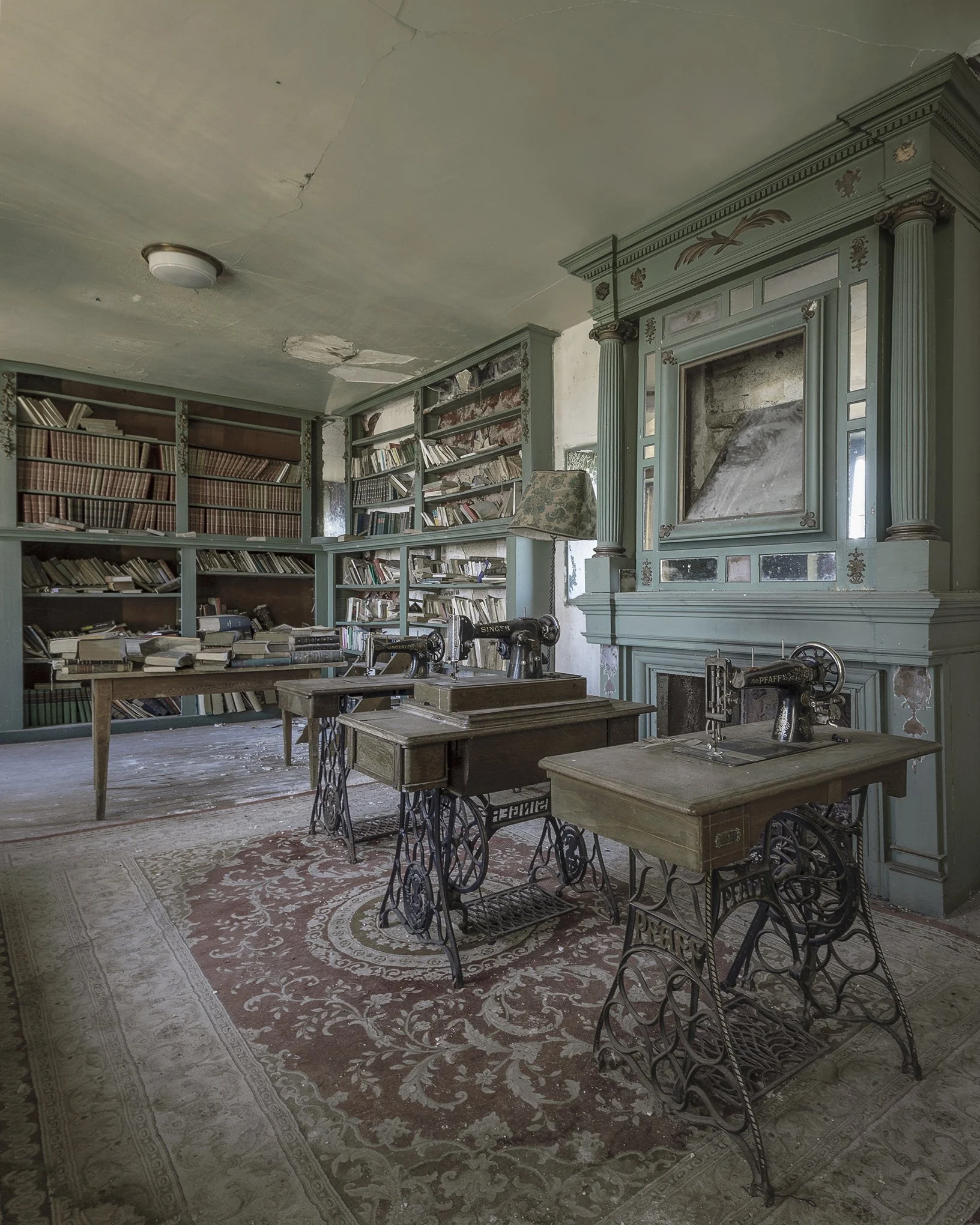
Hidden in the countryside of France’s Nièvre department stands Château Secret, once perhaps France’s most evocative urbex location. A few years ago, urban explorers could step inside and wander through its seemingly endless corridors and rooms, filled with antiques, personal belongings and mysteries.
The château became known through the urbex community and the iconic photographs taken by those who visited it, but its story begins many centuries before it became a place of exploration. The origins of “Secret” reach back to the 15th century, when the site was a fortified seigneurial residence. Protected by ditches and defensive enclosures, the original manor was very different from the elegant château visible today. Of the medieval, structure, only fragments survived, most notably the old entrance with its two towers, which were later incorporated into the newer building.
The property remained associated with noble families for generations. The name of the château itself derives from the family who originally held the estate. In 1720, ownership passed to the Flamen du Coudray family, before the estate eventually came into the hands of the Montrichard family, an old French noble family, in the early 19th century.
The château entered its most important architectural period under Count Armand de Montrichard (1812–1875). In 1868, he commissioned the construction of the present Neo-Renaissance château, transforming the old estate into an imposing country residence. The scale of the project was considerable: Armand even sold other family properties, including the Château de Saint-Martin and the Colombier, in order to concentrate resources on La Chasseigne.
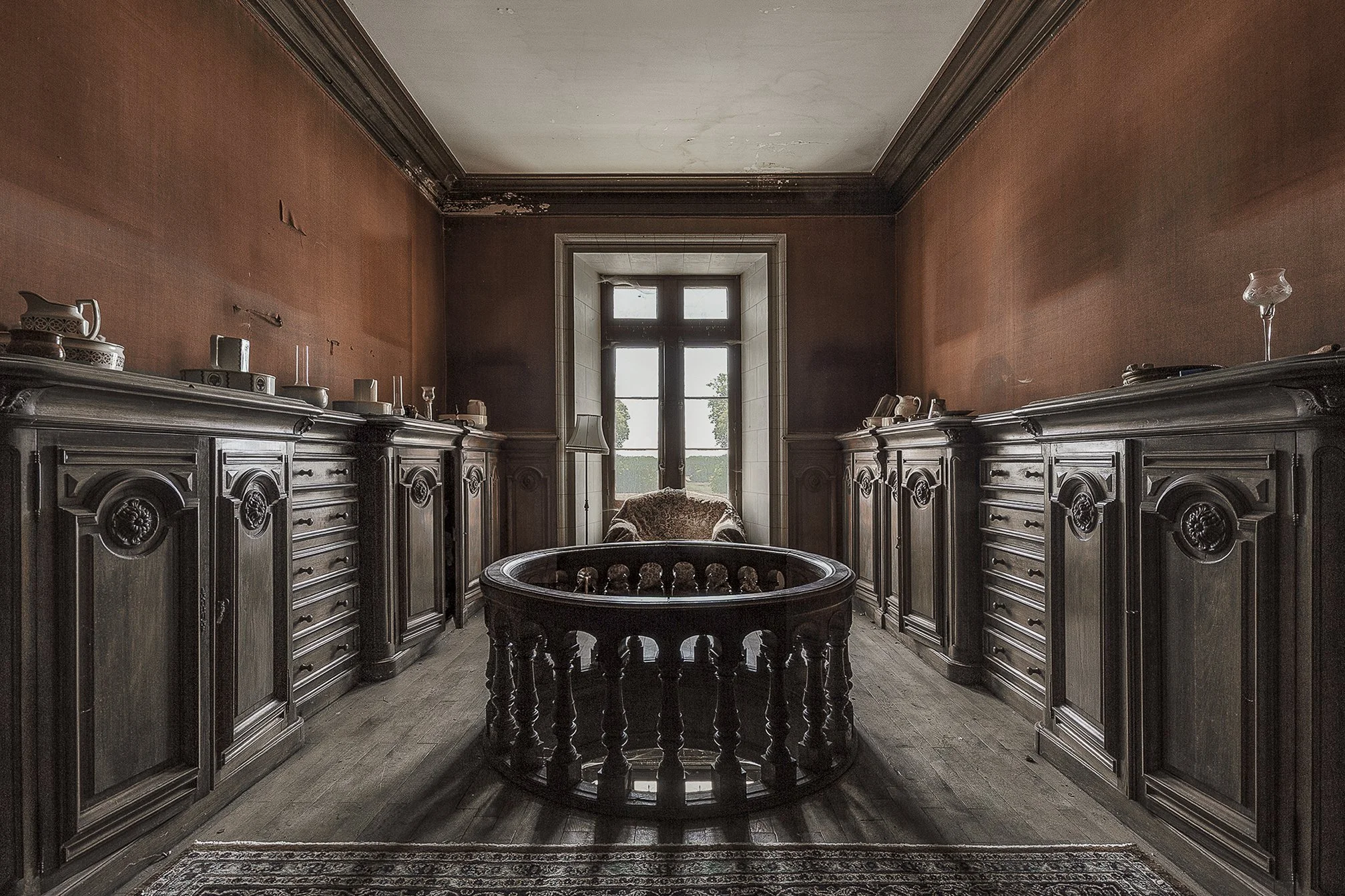
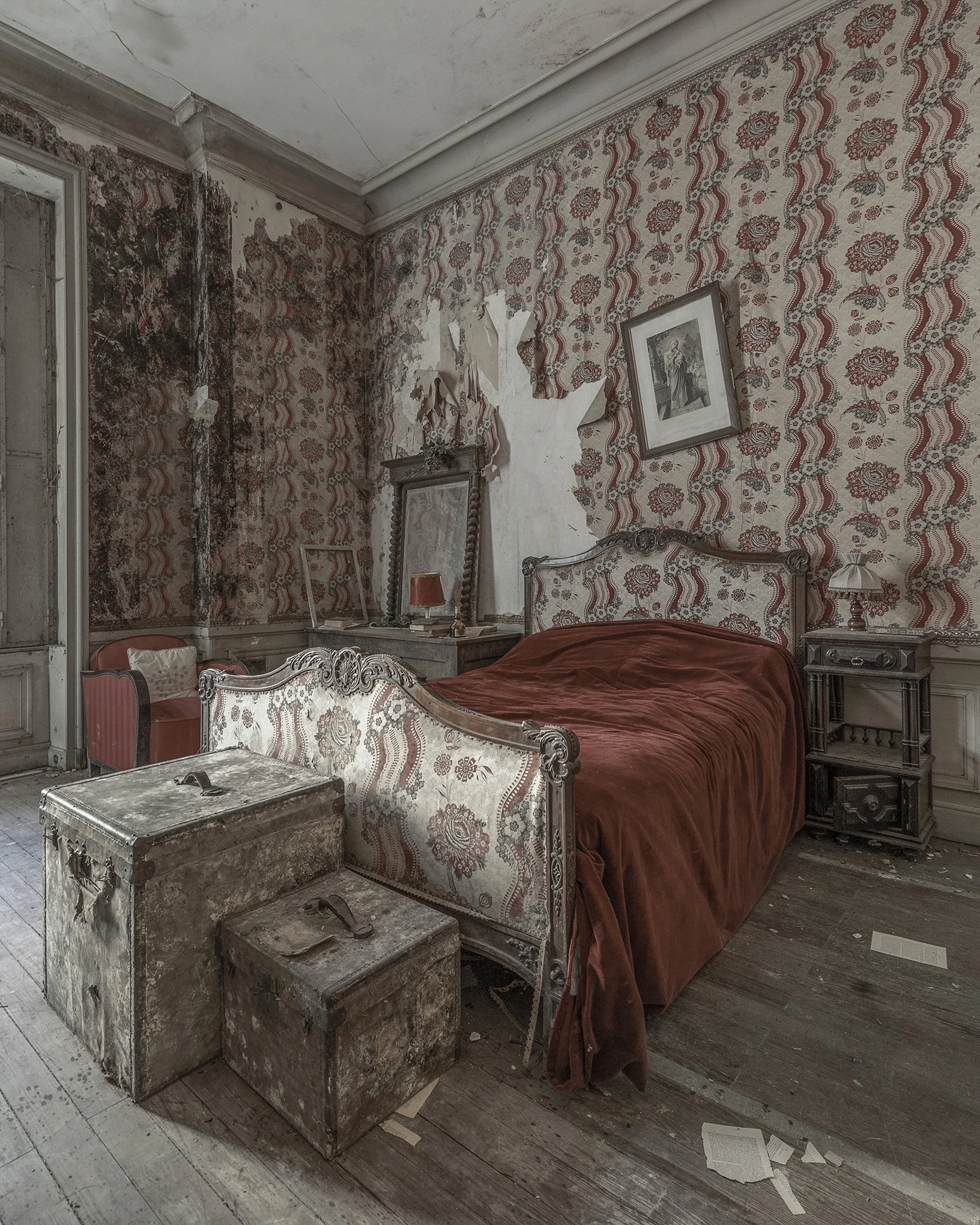
For generations, the château remained a private family residence. Its rooms accumulated furniture, books, personal possessions and family archives, creating the remarkable interior that would much later fascinate urban explorers. By the beginning of the 21st century, however, the château had entered a very different chapter. Apparently, the owner was no longer able to keep up with the maintenance, and in 2003 the property was reportedly sold to a local architect. He embarked on a restoration project and furnished the rooms with second-hand furniture.
According to stories circulating online, the architect eventually sold the property in 2017 for a mere euro to two Indonesian real-estate investors, reportedly on the condition that they would complete the restoration. The investors appear to have abandoned the project, and the château gradually fell into neglect. As word spread through the urbex community, photographs of its remarkably preserved interiors transformed the château into the mysterious “Château Secret.”
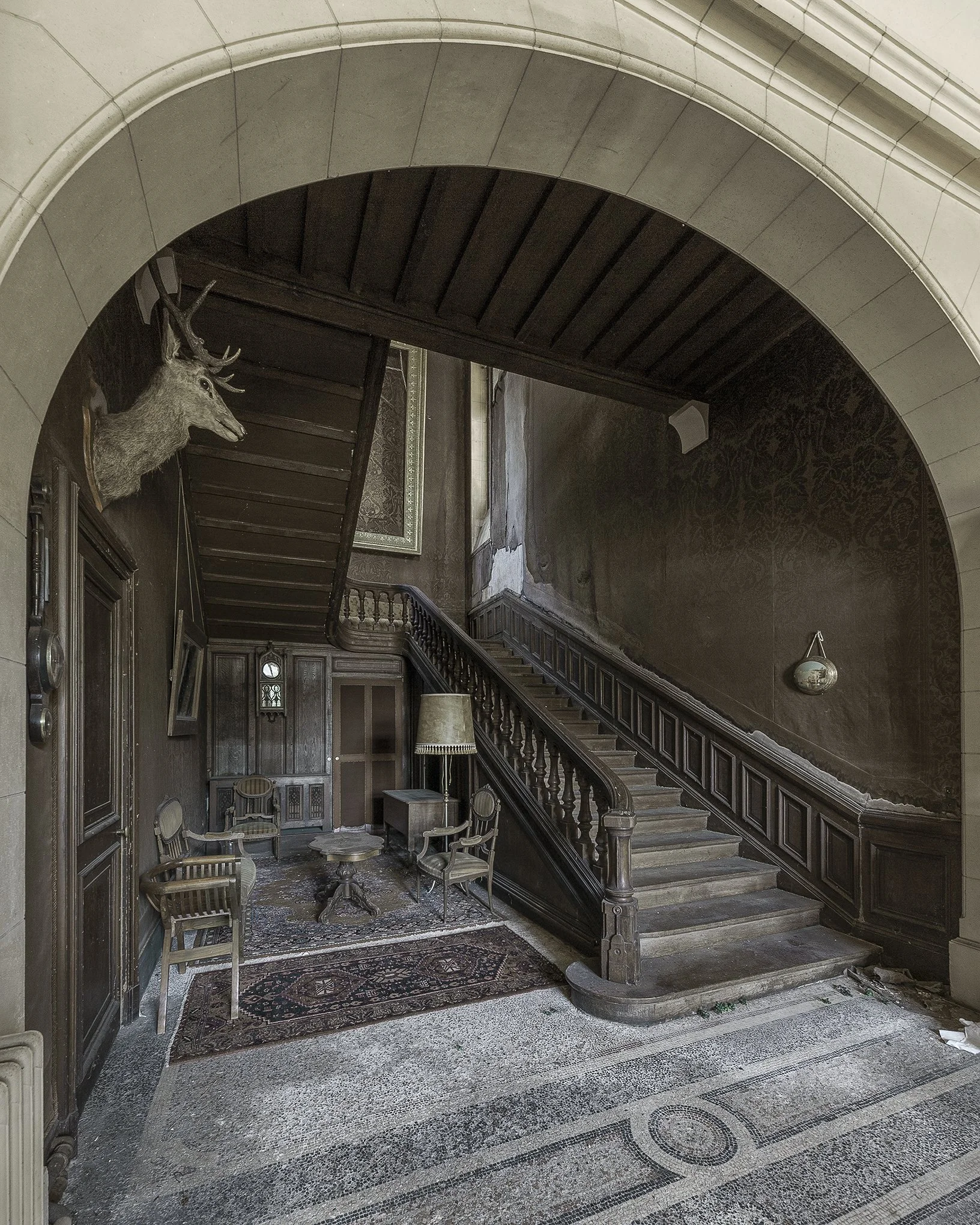
We visited Château Secret in 2019, when it was still in remarkably good condition. It took only seconds after opening the front door to realise that the place was unique. On the ground floor, we encountered a wood-panelled main hall with a staircase leading to the second floor. Statues, old books and spiderwebs filled the space. A gigantic painting had once hung on the wall beside the stairs, but by the time of our visit it was already gone.
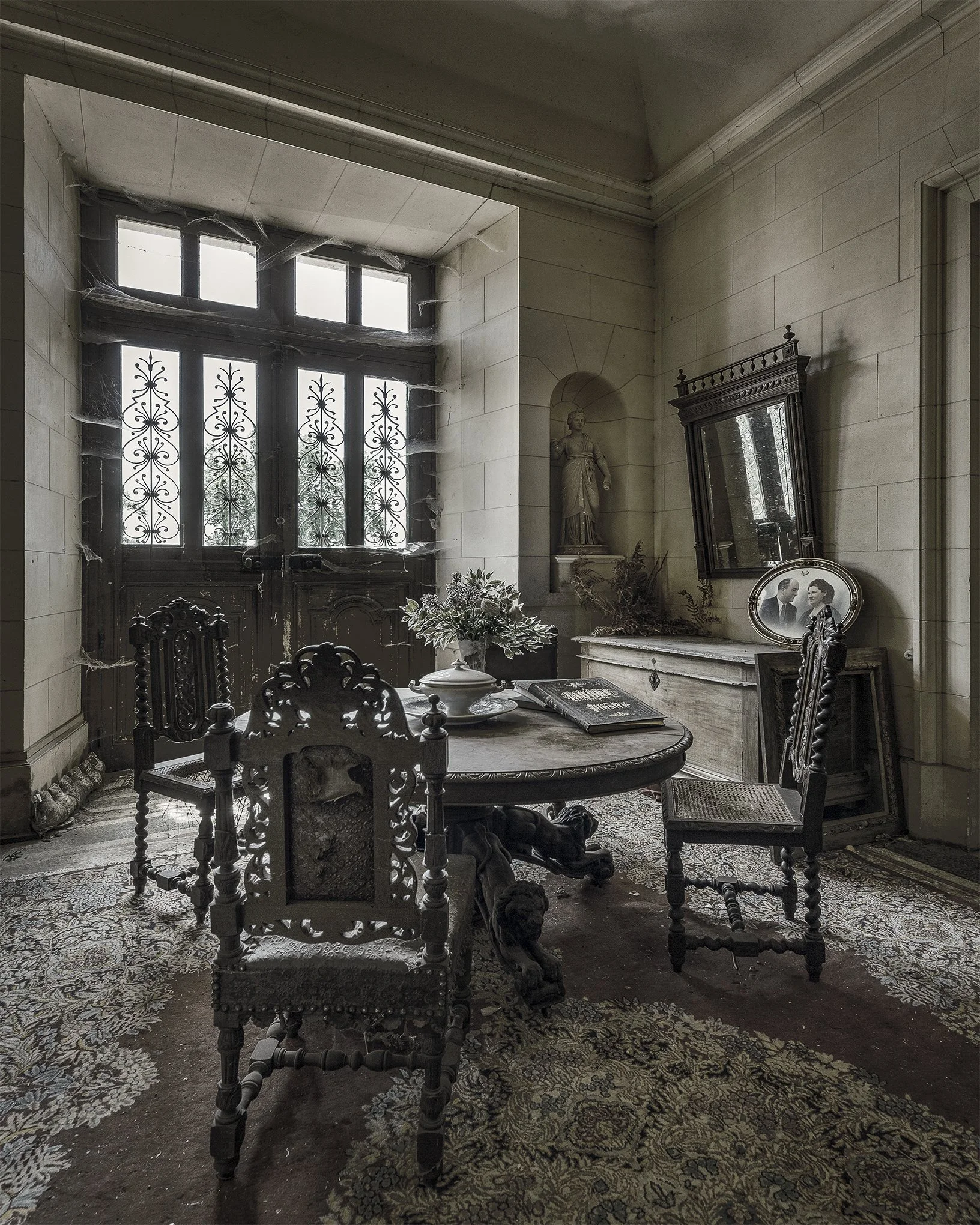
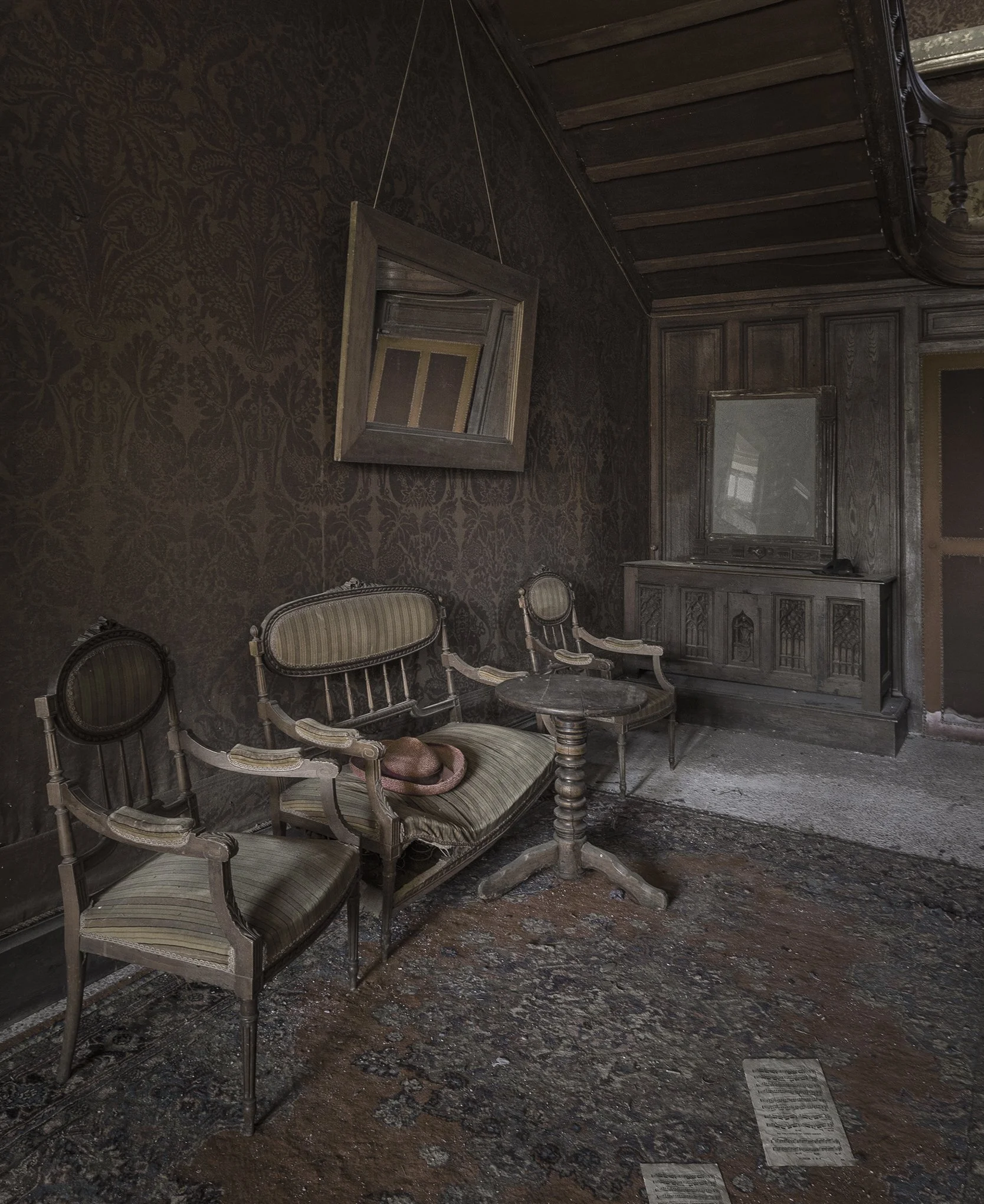
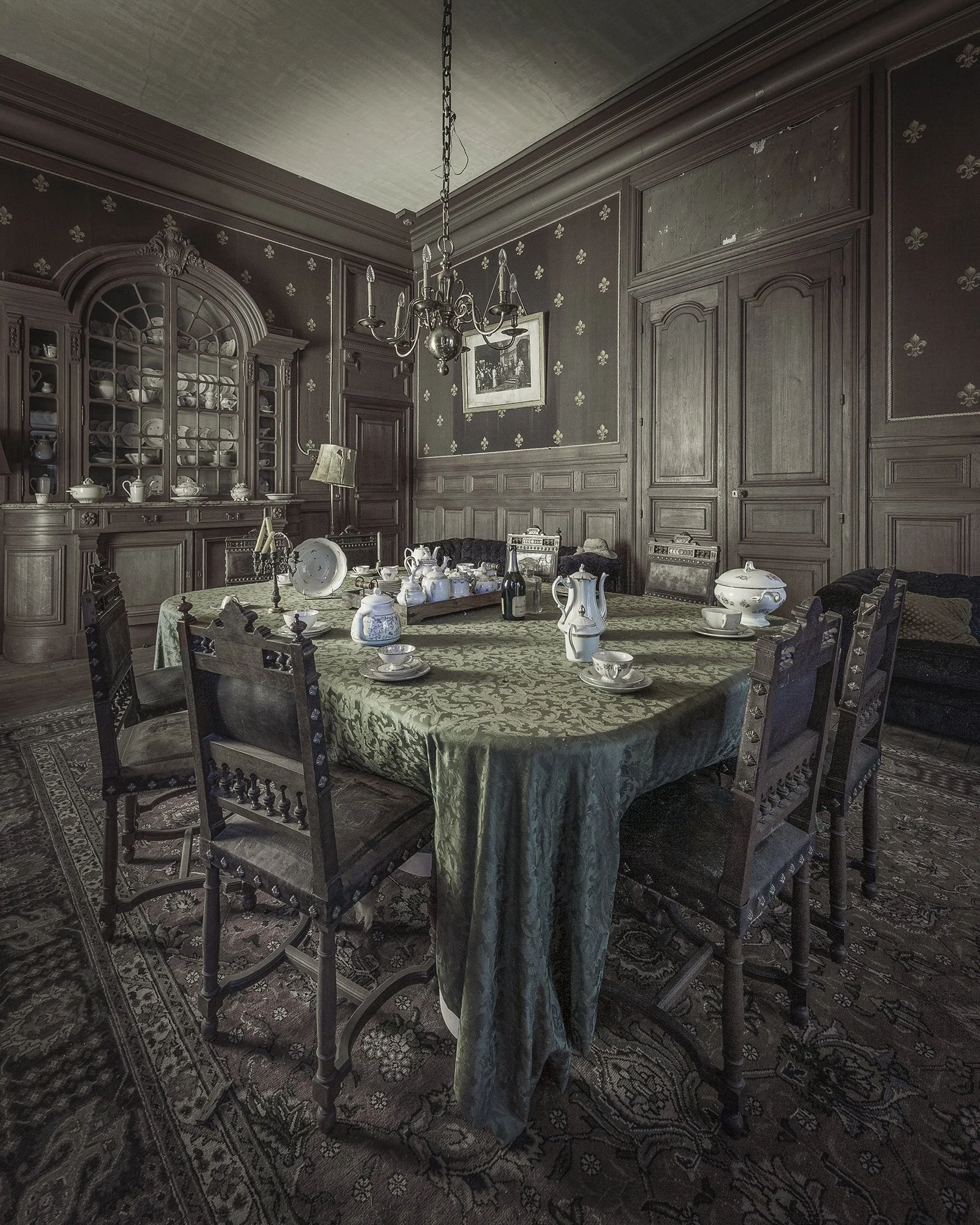
Next to the main hall were several living rooms, still furnished with pieces such as a Maison Pleyel piano and various seemingly valuable objects that looked as though they would eventually attract unwanted attention. One of the most memorable rooms was the dining hall, decorated with French fleur-de-lis motifs covering the walls. It is also one of the château’s most recognisable scenes, appearing frequently in urbex photographs and on Instagram.
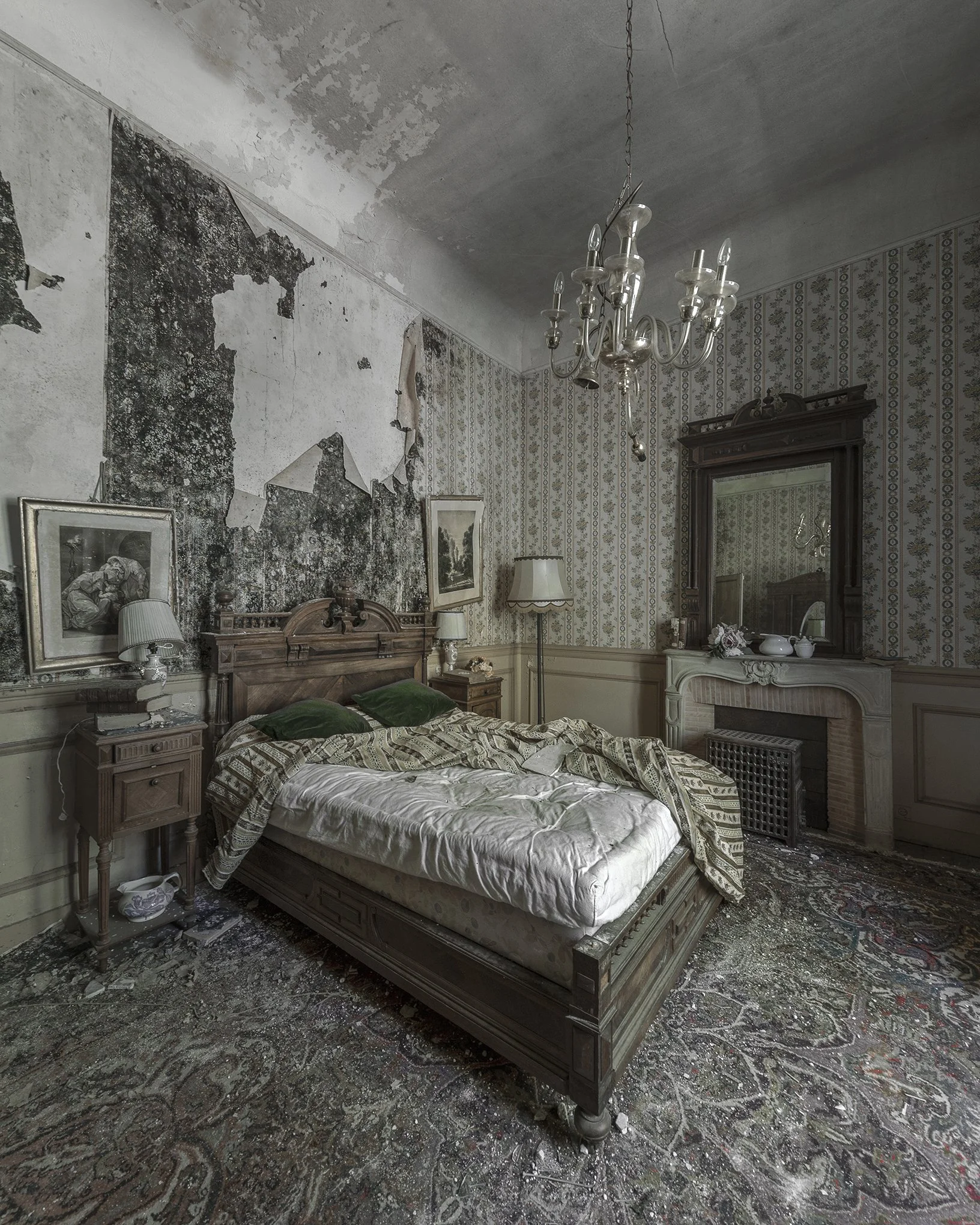
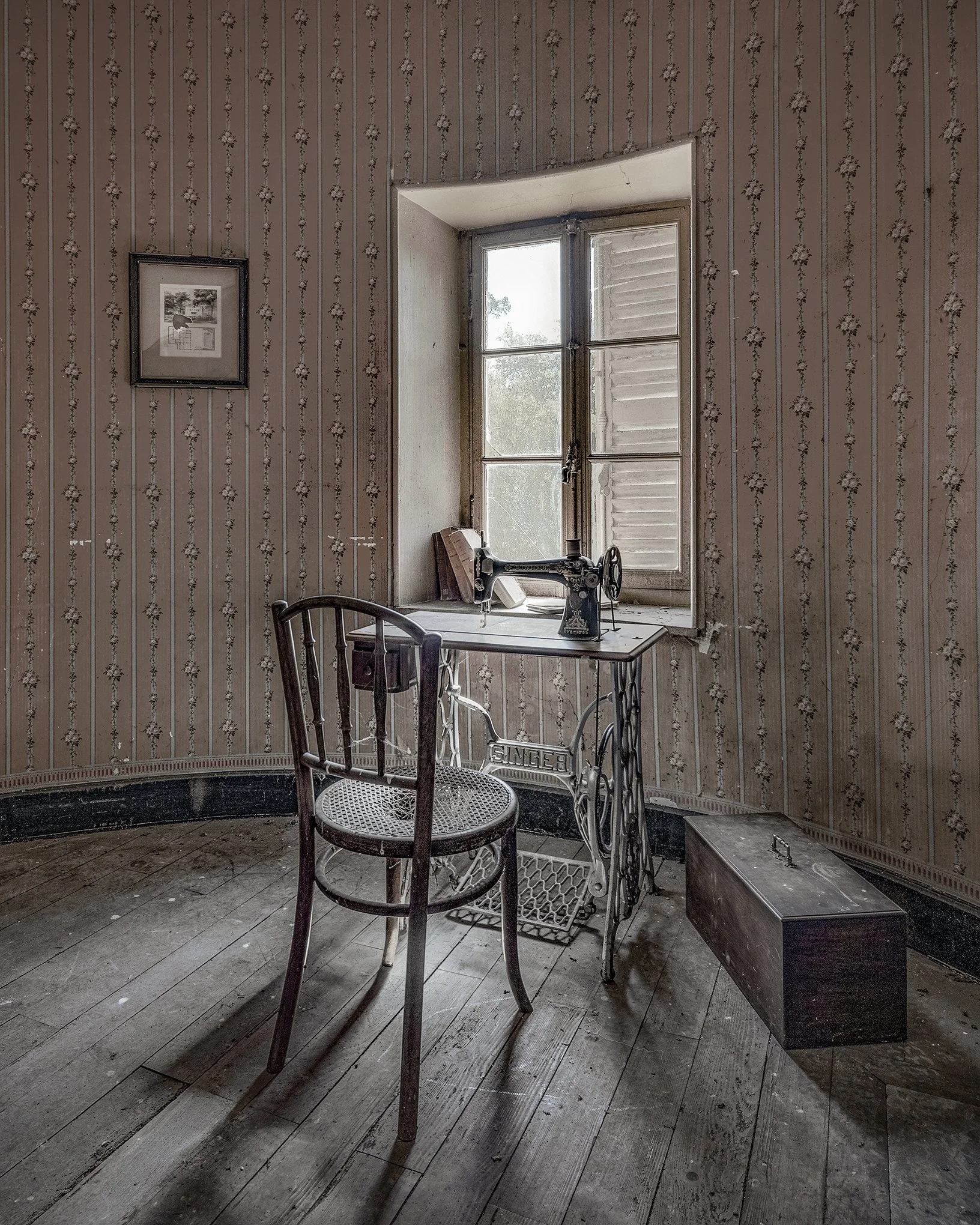
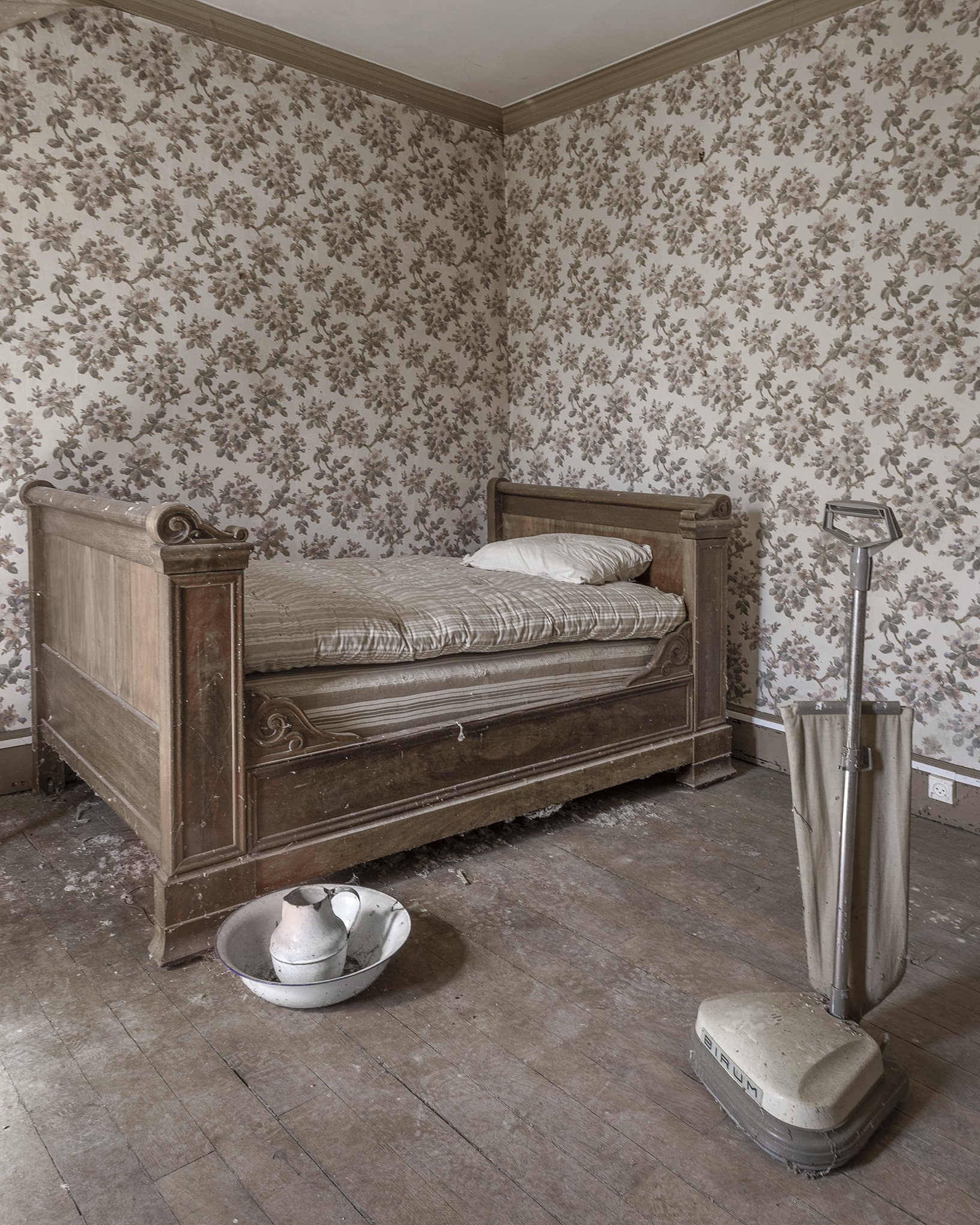
The second floor was a maze of rooms. Interesting objects—a typewriter, a pram, toys and various personal belongings—were scattered throughout the building, seemingly waiting to be photographed. As we ventured deeper into the château, we encountered more rooms and more objects, each one inviting us to imagine the lives of the people who had once occupied them.
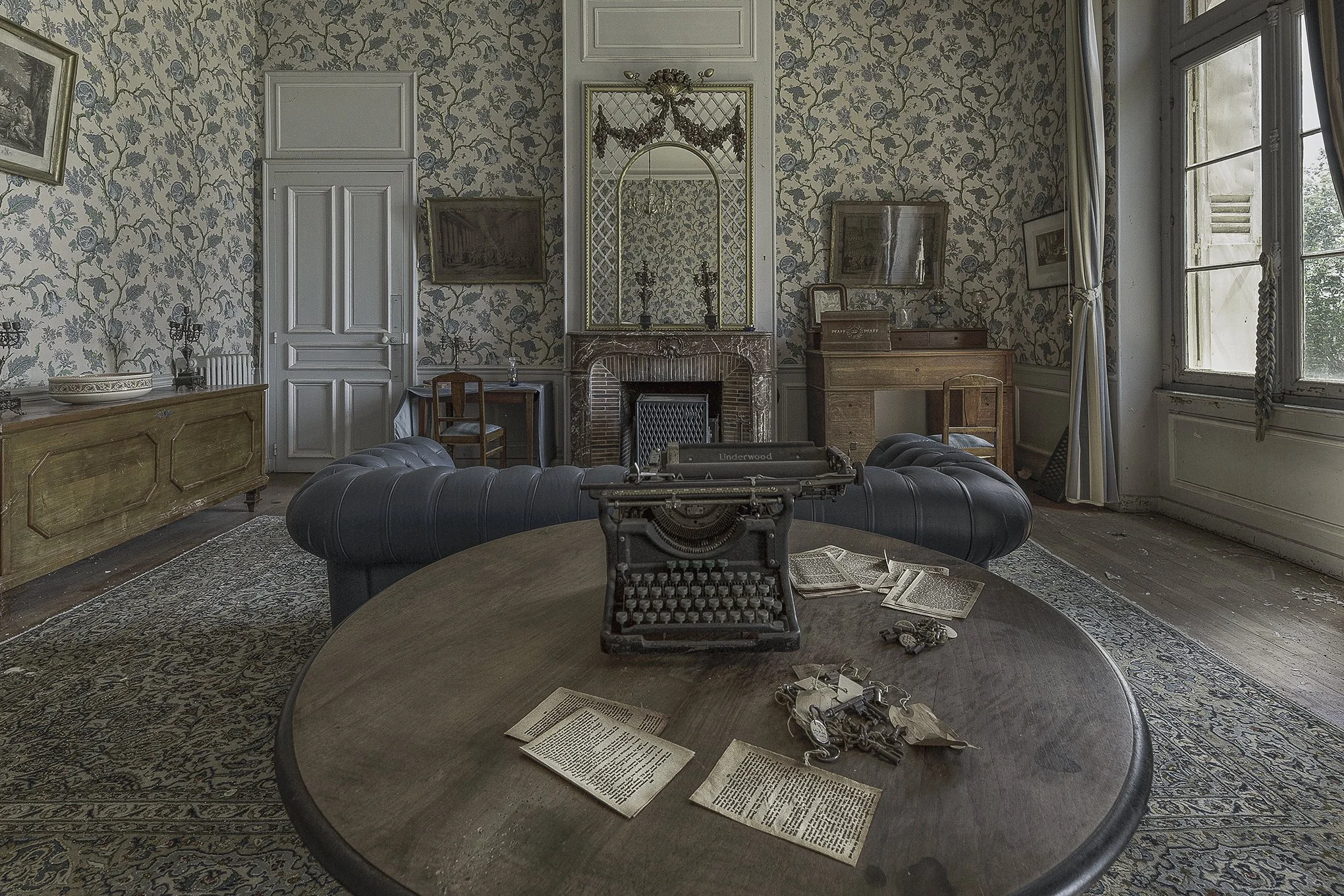
One story that has circulated widely online claims that the owner of the château died aboard the Titanic in 1912. However, this appears to be nothing more than an invented story, seemingly created to attract attention on social media. During our visit, we found documents dating from as recently as 2012, suggesting that the château’s abandonment was a much more recent event than the legend would have us believe.
There have also been stories of a legal dispute between the owner and the château’s groundskeeper. Like many famous urbex locations, Château Secret has accumulated its share of rumours, legends and half-truths over the years.
It is therefore no surprise that there have been efforts to protect this unique château before something irreversible happens. In 2020, the association Les Amis was founded with the aim of helping to preserve the property.
Today, the château is a very different place from the one we encountered in 2019. From what can be seen in recent social-media posts, cameras and sensors have been installed around the property to deter unwanted visitors. The days when explorers could simply open the door and wander through its forgotten rooms appear to be over.