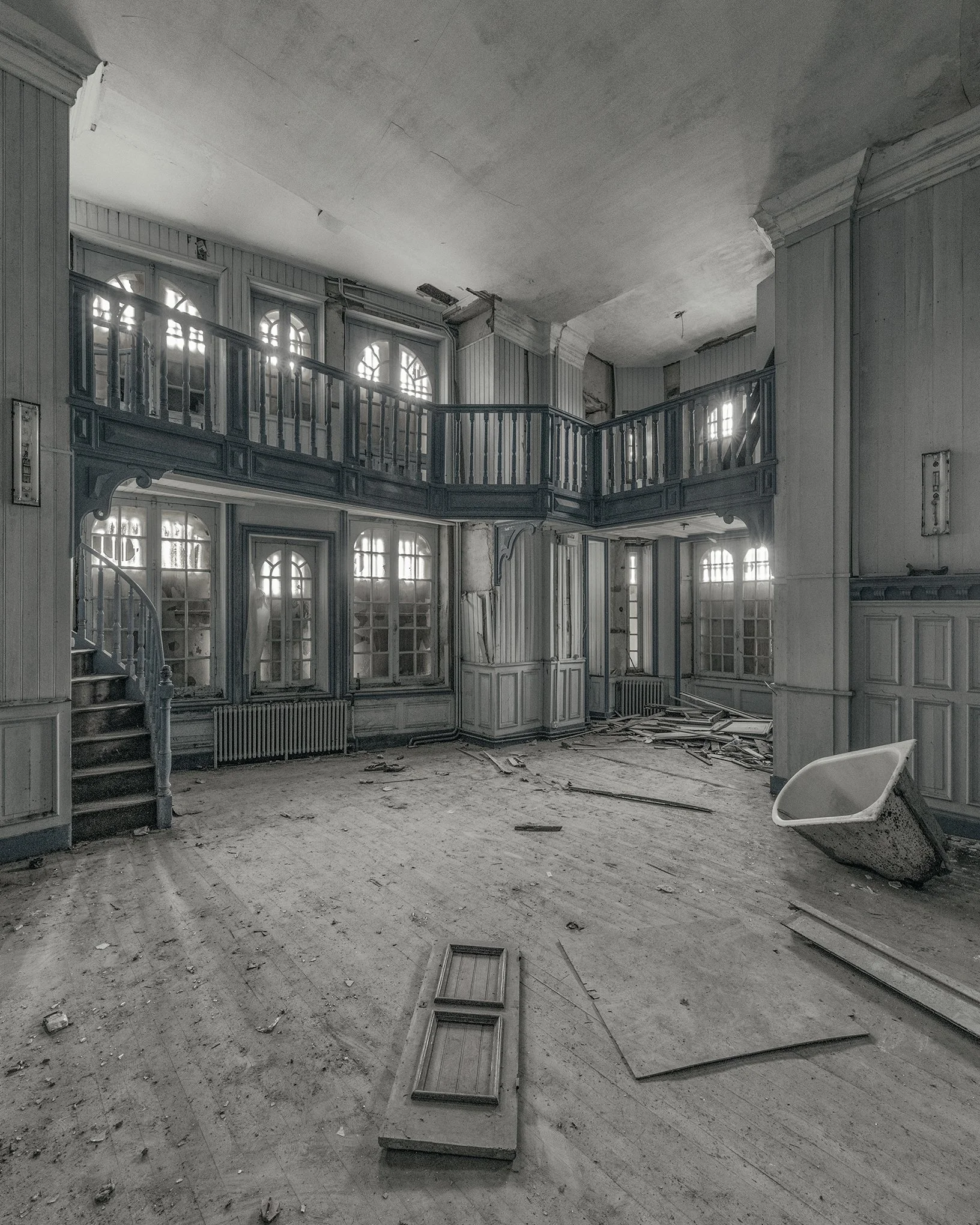
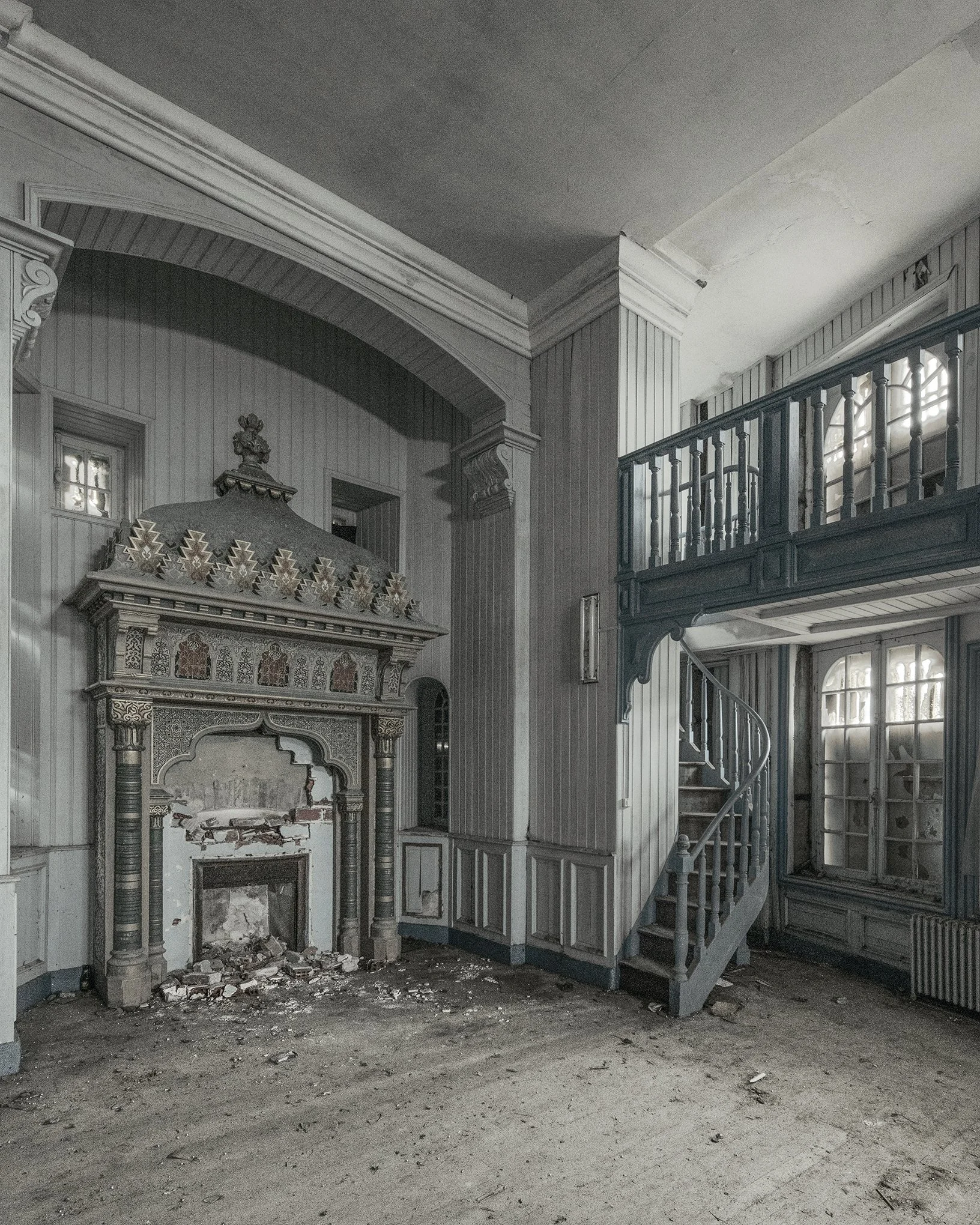
Chateau Heliomarin
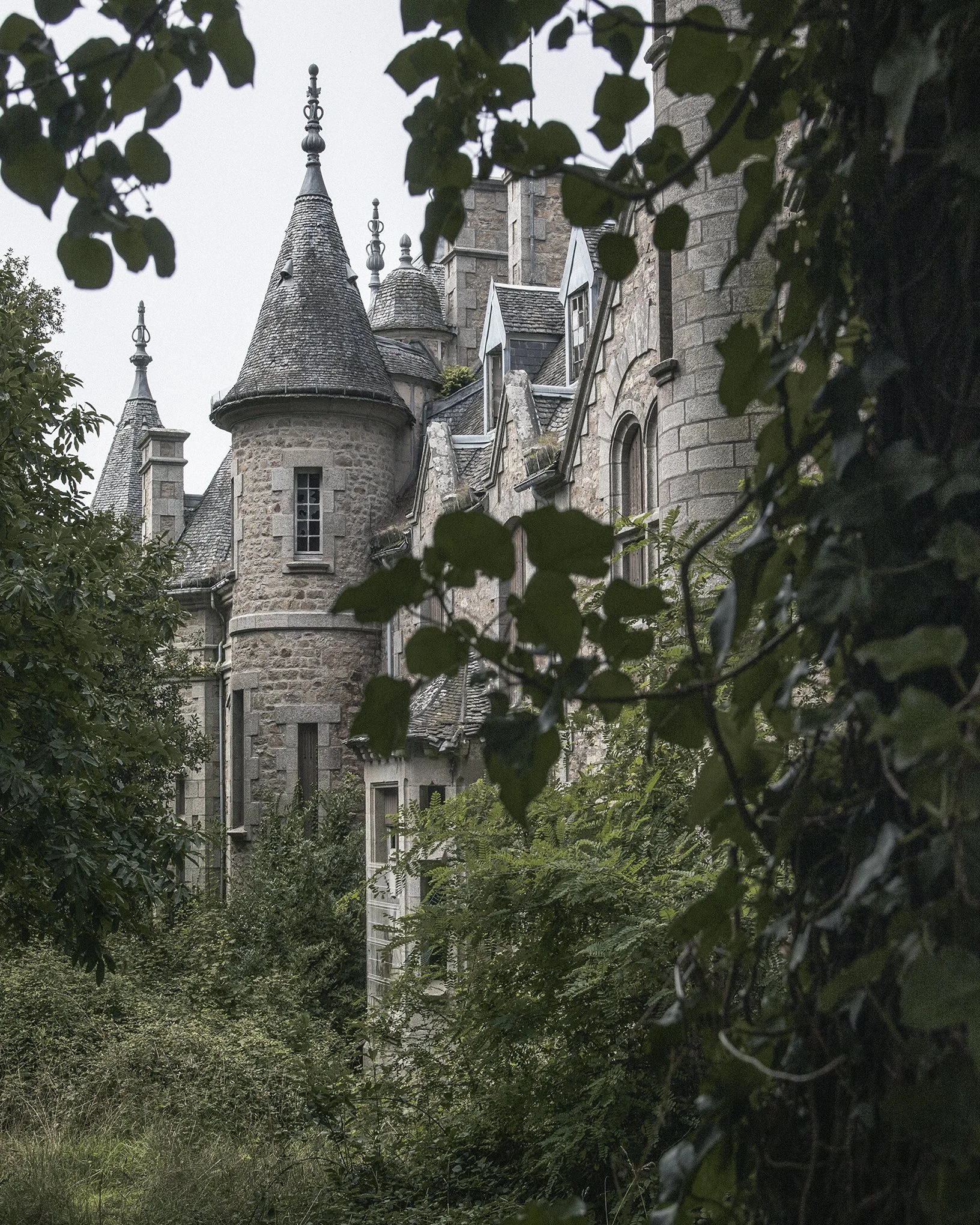
Chateau Heliomarin was built most likely in the final decades of the 19th century. For much of the 20th century, it was associated with a nearby medical institution, whose work was based partly on the idea that sunlight, fresh sea air and the marine environment could contribute to the treatment and recovery of patients.
Constructed in granite and slate, the large house followed the eclectic and neo-classical tastes of the period, with an irregular plan, projecting wings, ornamental stonework and several distinct rooflines. It was designed as a substantial private residence overlooking the coastal landscape.
By the beginning of the 20th century, in 1902, the property and surrounding land became part of a charitable legacy intended to benefit children. Local accounts suggest that before this time, the owners of the chateau had adopted a young boy who later drowned in an accident near the coast, although this story is not confirmed by the official heritage records and may be no more than local legend.
In 1920, the property was formally placed at the disposal of a nearby sanatorium under a 99-year arrangement. The sanatorium had begun as a centre treating children, particularly those suffering from tuberculosis and related illnesses, and developed into what became known as a centre héliomarin.
The word héliomarin comes from hélio, meaning sun, and marin, meaning sea. These institutions were based on the belief that sunlight, fresh sea air and the marine environment could contribute to the treatment and recovery of patients. The coastal setting was therefore not merely picturesque: it was considered part of the treatment itself. The house became an outpost of this medical institution, bringing an entirely different population into rooms that had originally been created as a private home.
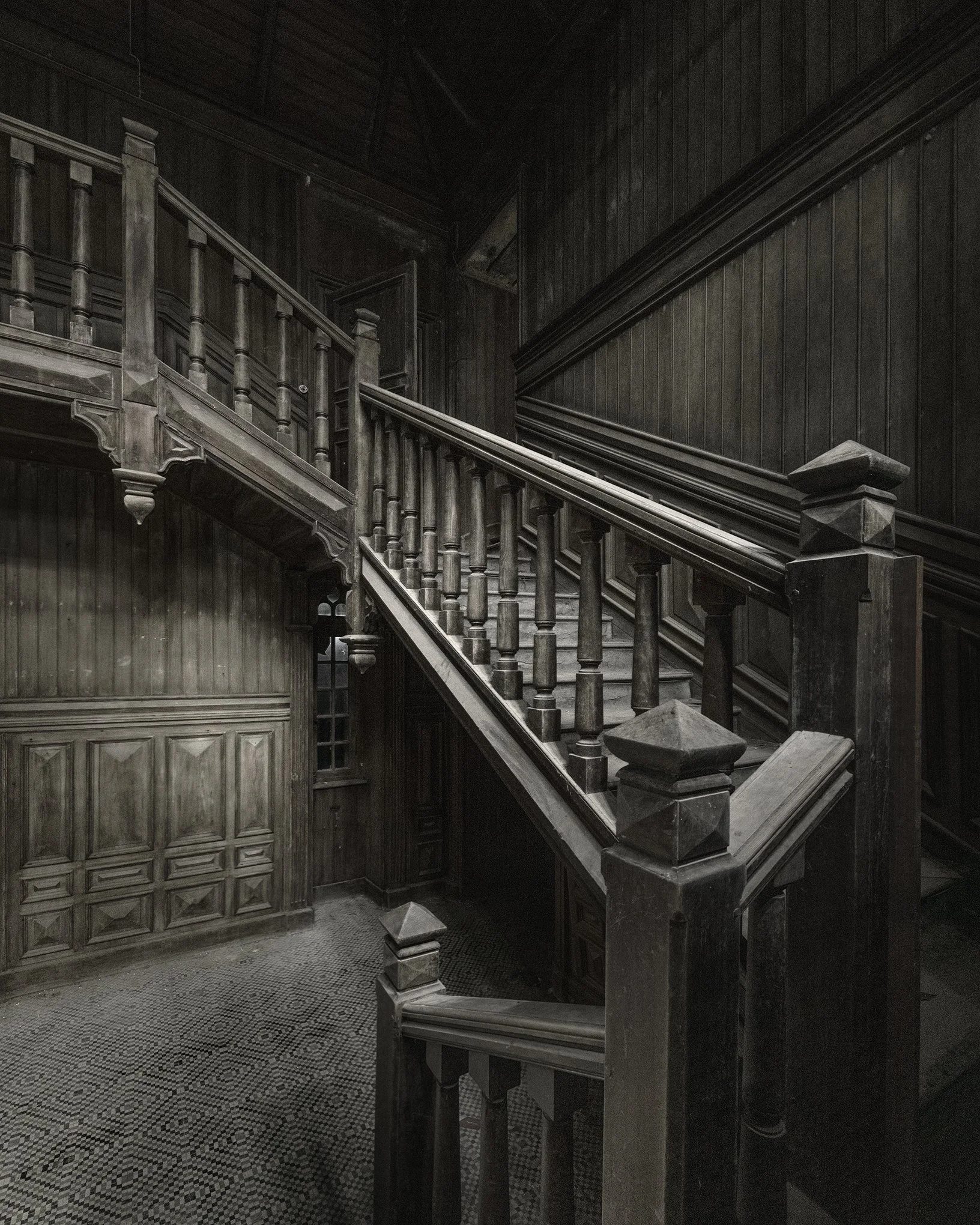
For much of the 20th century, the building remained associated with this medical and charitable world. Its history was consequently intertwined with the wider development of coastal medicine, particularly the treatment and rehabilitation of children.
Eventually, medical practices changed and the old buildings were no longer needed in the same way. In 2012, the héliomarin centre ended its long association with the property and concentrated its activities elsewhere on the nearby peninsula. Around the same period, ownership of several of the properties passed into public hands.
The chateau itself survived, but its useful life had effectively ended. Today it stands as a quiet relic of the 19th century: a building that passed from private residence to charitable institution, from a place of healing to a structure left unused. Despite its abandoned state, the chateau has not been completely forgotten. The gates have stood open for many years, and its proximity to the nearby town means that curious visitors still stop to explore the grounds. Some venture inside, discovering empty rooms, long hallways and the remains of a once-grand hall, all slowly being reclaimed by decay.