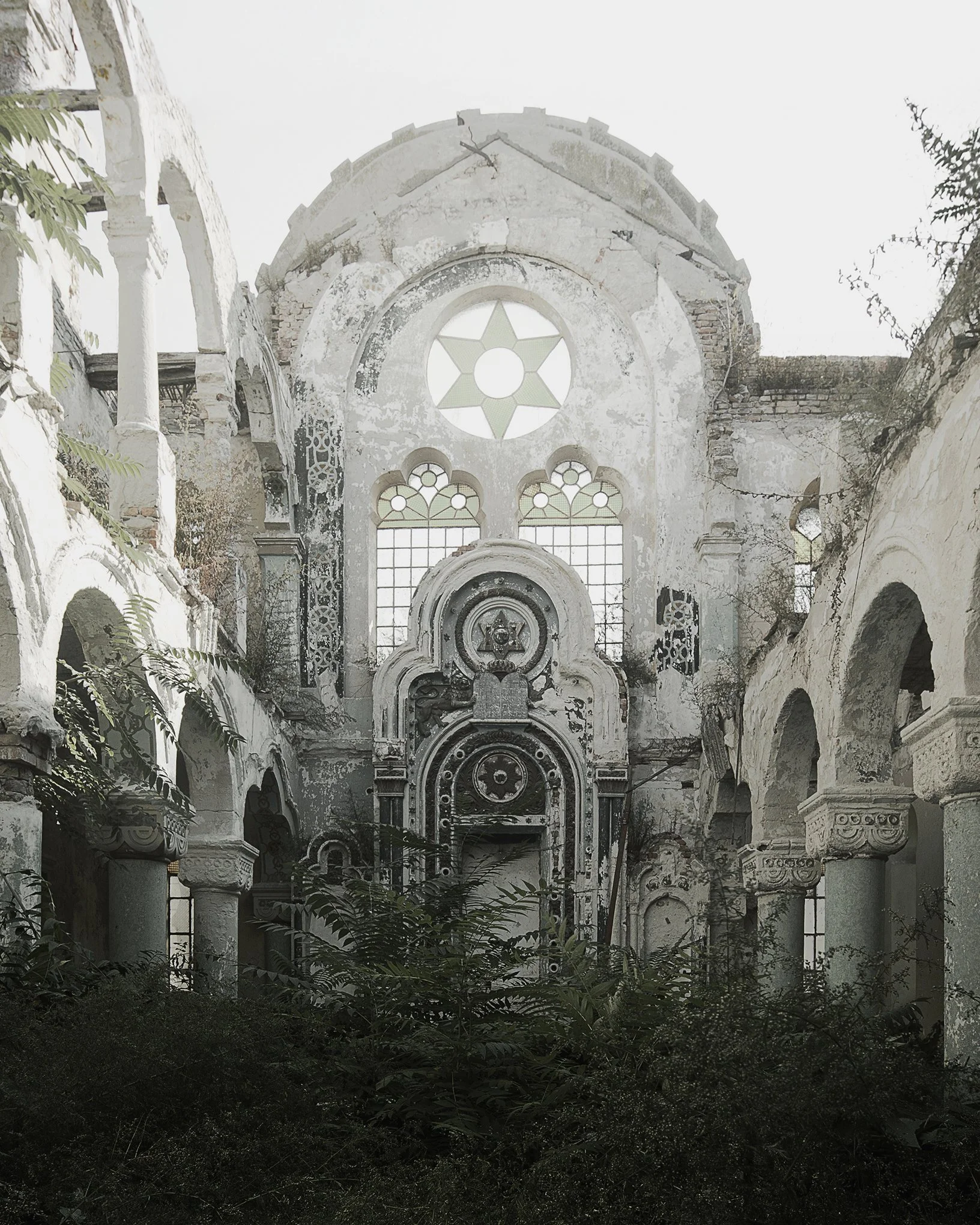
Synagoga Mare
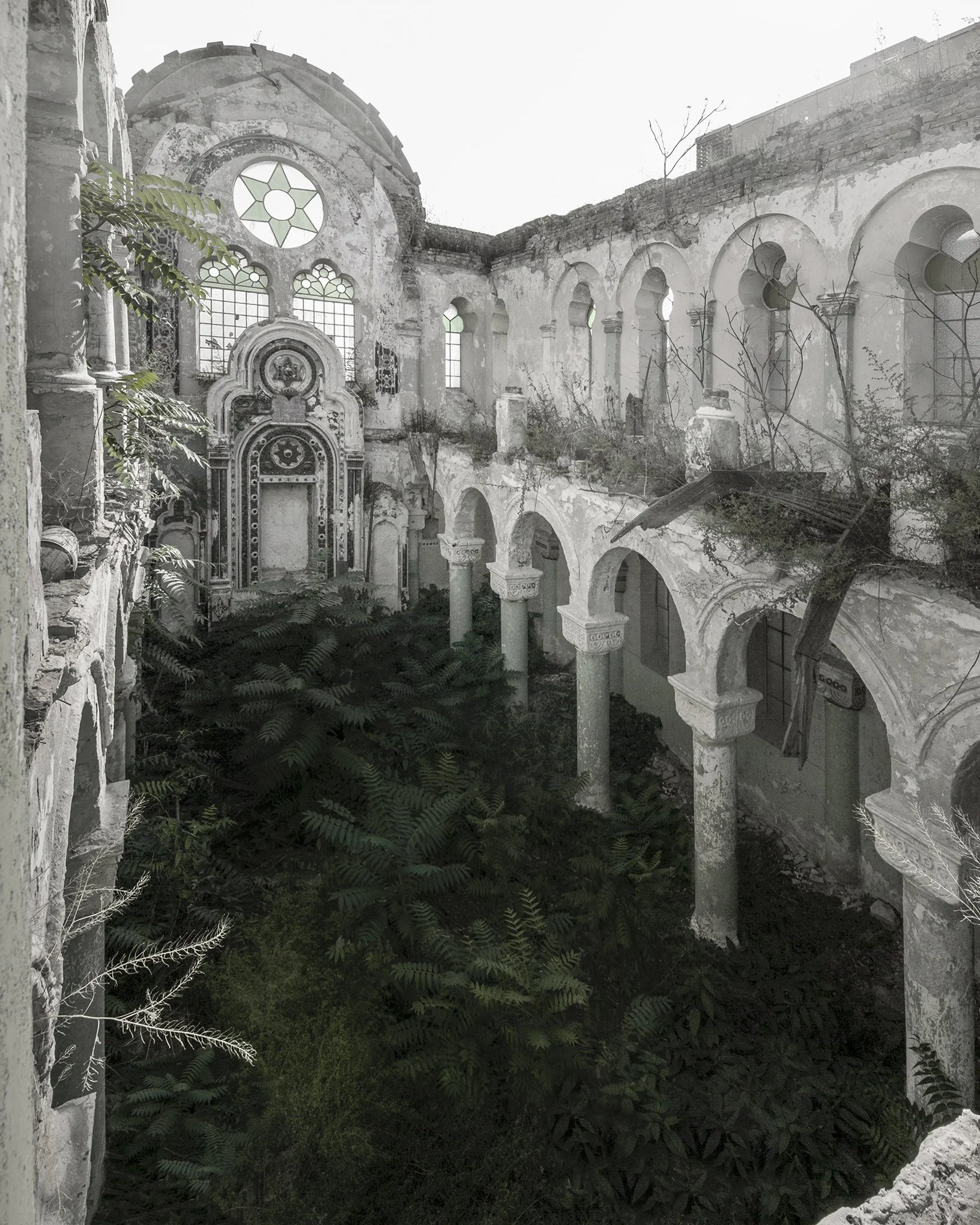
Synagoga Mare is an iconic Jewish synagoga near the Black Sea in Romania. Due to its previous poor condition, vegetation had invaded the inner parts of the synangoga, while many details reminded visitors of the origin and purpose of the building. Today, the synagoga has been restored.
Synagoga Mare was built between 1910 and 1914 to serve the rapidly growing Ashkenazi Jewish community which had become an important part of commercial and cultural life during the early twentieth centuriy in the city where the synagoga is located. The synagogue was designed by architect Adolf Linz. The style of the building is characterized by decorative arches, rich brickwork, and a monumental façade inspired by medieval Spanish and Middle Eastern architecture.
The Second World War and the Holocaust deeply affected the Jewish community in Romania. Although the synagogue itself survived the war - it was used as a German military warehouse - the community it served was dramatically reduced. In the decades that followed, many Romanian Jews emigrated, leaving only a small Jewish population in the city. As attendance declined, the synagogue was left to decay and was eventually abandoned. The story described is not uncommon, and there are several synagogues in Romania with a similar past.
By the late twentieth century, the building had entered a long period of neglect. Weather damage, structural deterioration, and lack of financial resources led to the collapse of parts of the roof and interior. For many years, the synagoga stood abandoned, and was visited by photographers and urban expolorers.
We visited this synagoga in 2017 and witnessed nature taking over the building. As we left, we were certain that this building could not be restored. Local authorities and the Romanian Jewish community proved us wrong since a restoration project was launched in the 2020s. Conservation work stabilized the structure and restored its architectural features. The synagogue reopened in 2026.